
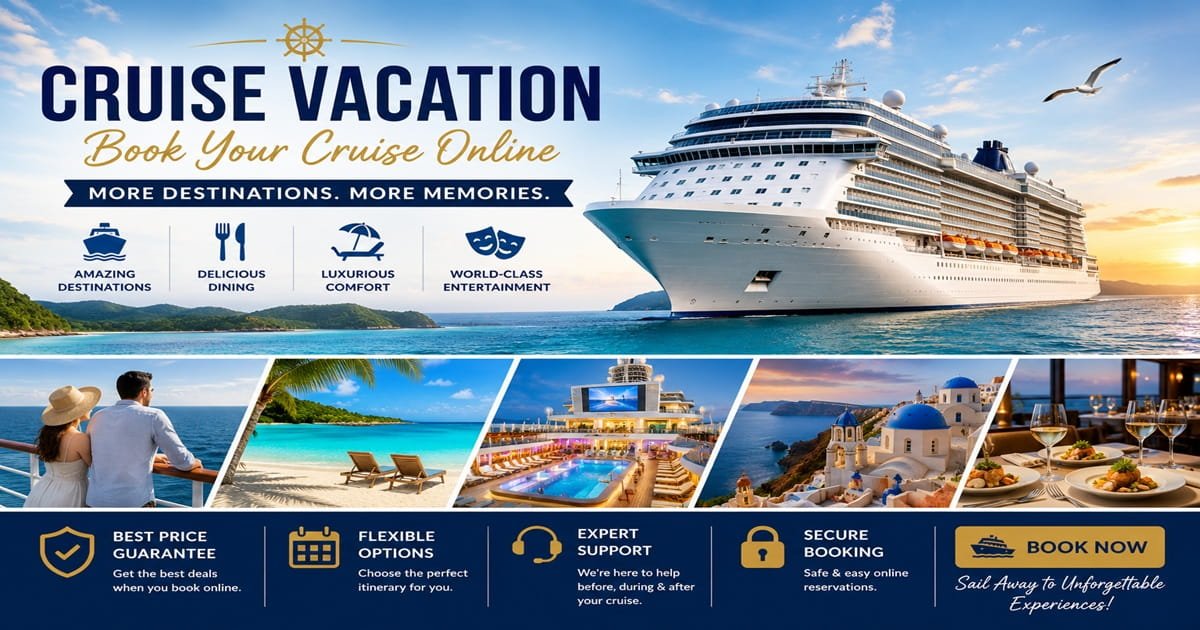
Cruise Vacation – Book Your Cruise Online

Cruise Vacation – Book Your Cruise Online
A cruise vacation offers a fantastic experience that combines travel to multiple destinations with onboard accommodation, dining, and entertainment. Instead of repeatedly packing bags, changing hotels, and arranging transfers, travelers stay on the same ship as they journey between different ports.
Whether you are planning a short family getaway, a trip to the Mediterranean, an adventurous Alaskan expedition, a romantic Caribbean voyage, or simply a luxurious journey, online cruise-booking platforms can help you compare ships, routes, cabins, and packages before you make a payment. Sign Up and Receive a €50 Discount Code Immediately!
Cruise Vacations at a Glance
| Category | Main options |
|---|---|
| Cruise duration | Two-night getaways to multi-month world cruises |
| Popular destinations | Caribbean, Mediterranean, Alaska, Northern Europe and Asia |
| Accommodation | Interior, ocean-view, balcony and suite cabins |
| Common inclusions | Cabin, standard dining, entertainment and many onboard activities |
| Common extras | Gratuities, drinks, Wi-Fi, excursions, spa treatments and speciality dining |
| Cruise styles | Family, luxury, expedition, river, adults-only and themed |
| Booking methods | Cruise-line website, online agency or travel adviser |
| Essential documents | Passport, visas and destination-specific permits |
Why Choose a Cruise Vacation?
Visit Several Destinations in One Trip
A cruise itinerary may include multiple ports without requiring passengers to arrange separate hotels, flights or trains between each destination.
A seven-night Mediterranean voyage, for example, might visit several cities or islands while the ship travels overnight. Travellers can explore a new destination during the day and return to the same cabin in the evening.
Accommodation and Transport Together
The ship acts as both a floating hotel and a means of transportation. Your cabin remains available throughout the journey while the vessel moves between ports.
This arrangement can simplify family holidays, group trips and journeys involving destinations where land-based transportation would otherwise be expensive or complicated.
Dining and Entertainment
Cruise fares commonly include the cabin, meals in selected restaurants, entertainment and access to many onboard facilities. Royal Caribbean lists accommodation, complimentary dining, entertainment and numerous activities among its standard inclusions, while Norwegian Cruise Line similarly includes accommodation, regular dining, entertainment and youth programming. Exact benefits depend on the cruise line and fare.
Activities for Different Travellers
Large resort-style ships may offer pools, water attractions, theatres, sports areas, children’s clubs and live performances. Smaller vessels may focus more heavily on destination experiences, personal service, nature or cultural enrichment.
Passengers should select a ship according to their preferred travel style rather than booking only on the basis of price.
Types of Cruise Vacations
Ocean Cruises
Ocean cruises are the most widely available option. They range from short regional trips to transatlantic voyages and world cruises.
Large ships generally provide the greatest selection of restaurants, entertainment venues and family facilities. Smaller ocean ships can access ports that may not accommodate the largest vessels.
Family Cruises
Family-focused cruises are designed for parents, children and multigenerational groups.
Depending on the ship, facilities may include:
-
Supervised children’s clubs
-
Teen spaces
-
Family pools
-
Water slides
-
Sports areas
-
Children’s menus
-
Connecting cabins
-
Family entertainment
Check age requirements for children’s programs, nursery services and activities before booking.
Luxury Cruises
Luxury cruises usually feature smaller ships, upgraded dining, higher crew-to-passenger ratios and more inclusive pricing. Some premium fares may include drinks, gratuities, speciality restaurants, Wi-Fi or selected excursions.
Luxury cruising was identified by cruise-industry travel professionals as one of the sector’s strongest growth areas in 2025.
River Cruises
River cruises travel along inland waterways and usually focus more heavily on the destinations than large-scale onboard attractions.
Popular regions include European rivers such as the Rhine, Danube, Seine and Douro, as well as waterways in Egypt and Southeast Asia. River ships are smaller than ocean vessels and often dock close to historic town centres.
Expedition Cruises
Expedition cruises are designed for remote regions such as Antarctica, the Arctic, the Galápagos Islands and other nature-rich destinations.
These voyages may include specialist guides, lectures, wildlife observation and landings using smaller boats. They are usually more expensive than mainstream cruises because of their remote routes and specialist operations.
Adults-Only Cruises
Adults-only voyages are intended for travellers seeking an environment without children’s facilities or family programming.
They may emphasise dining, nightlife, wellness, entertainment or destination experiences. Minimum passenger ages vary by cruise line.
Popular Cruise Destinations
Caribbean and the Bahamas
The Caribbean is popular for warm weather, beaches, water activities and a large selection of departure ports and itineraries.
Cruises may visit the eastern, western or southern Caribbean, with ports in destinations such as the Bahamas, Jamaica, Mexico, the Cayman Islands and several smaller island nations.
Mediterranean
Mediterranean voyages combine beaches, food, culture and historic cities.
Common itineraries may include Spain, France, Italy, Greece, Croatia, Malta and Turkey. Western Mediterranean routes often focus on Spain, France and Italy, while eastern itineraries commonly feature Greece, Croatia and Turkey.
Alaska
Alaska cruises are known for glaciers, mountain scenery, wildlife and coastal communities.
Some travellers combine the cruise with a land tour to visit inland destinations. When comparing Alaska itineraries, examine the ports, glacier-viewing opportunities, time ashore and whether the cruise begins and ends in the same city.
Northern Europe
Northern Europe itineraries may include the Norwegian fjords, Iceland, the British Isles, Baltic ports and Arctic destinations.
These trips are particularly attractive to travellers interested in scenery, historic cities and cooler climates.
Asia
Asian cruises may operate from ports such as Singapore, Hong Kong, Tokyo, Shanghai, Bangkok-area ports and Dubai.
Itineraries can visit several countries, making visa planning particularly important for Indian passport holders and other international travellers.
Choosing the Right Cruise Ship
The itinerary determines where you go, but the ship determines much of your daily experience.
A very large vessel may provide extensive dining, entertainment and recreational facilities, while a smaller ship may offer a quieter atmosphere, easier navigation and access to smaller ports.
Before booking, compare:
| Feature | What to check |
|---|---|
| Ship size | Passenger capacity and overall atmosphere |
| Dining | Included venues and speciality restaurants |
| Entertainment | Shows, music, nightlife and daytime activities |
| Family facilities | Kids’ clubs, pools and family cabins |
| Wellness | Gym, spa and adults-only relaxation areas |
| Accessibility | Step-free cabins, lifts and assistance |
| Internet | Package price and device limits |
| Itinerary | Time in each port and number of sea days |
A new ship is not automatically the best option. An older or smaller vessel may offer a better route, lower fare or more relaxed experience.
Cruise Cabin Types
Interior Cabin
Interior cabins do not have an external window. They are usually the most affordable accommodation and can suit passengers who expect to spend limited time in the room.
Because these cabins remain dark when the lights are off, some travellers sleep particularly well in them.
Ocean-View Cabin
Ocean-view cabins have a window or porthole but generally do not include private outdoor space.
Check whether the view is unobstructed, partially obstructed or fully blocked by equipment such as lifeboats.
Balcony Cabin
Balcony cabins include a private outdoor seating area.
They are popular on scenic itineraries such as Alaska, the Norwegian fjords and Mediterranean island routes. However, the size and design of the balcony can vary considerably.
Suite
Suites normally provide additional living space and may include larger balconies, separate bedrooms, priority services or access to exclusive restaurants and lounges.
Benefits vary by ship and suite category, so read the complete list rather than assuming every suite includes the same privileges.
What Is Usually Included in a Cruise Fare?
A standard cruise fare commonly includes:
-
Your selected cabin
-
Transportation between listed cruise ports
-
Meals in designated restaurants
-
Buffet dining
-
Selected snacks
-
Live entertainment
-
Pools and public recreation areas
-
Many daytime activities
-
Children’s clubs on family-oriented ships
Royal Caribbean states that its standard fare covers the stateroom, complimentary dining, entertainment and many onboard attractions. Norwegian Cruise Line also identifies accommodation, regular dining, entertainment and eligible youth programming as standard inclusions.
Inclusions differ between companies, ships and promotional packages. Always review the fare details attached to the exact sailing.
What May Cost Extra?
Common additional expenses include:
-
Port taxes and government charges
-
Crew gratuities or service charges
-
Alcoholic beverages
-
Soft-drink and speciality-coffee packages
-
Speciality restaurants
-
Shore excursions
-
Wi-Fi
-
Spa and salon treatments
-
Casino spending
-
Professional photographs
-
Laundry
-
Airport transfers
-
Travel insurance
-
Flights and hotels
Norwegian Cruise Line lists gratuities, speciality dining, alcoholic beverages, excursions, internet, spa services and transfers among items that are ordinarily outside its basic fare. Princess Cruises similarly excludes many drinks, excursions, transportation and personal services unless they are included through a separate package.
Calculate these expenses before comparing two cruise offers. A higher advertised fare that includes drinks, Wi-Fi and gratuities may cost less overall than a cheaper basic ticket.
How to Book Your Cruise Online
1. Select the Destination
Begin with the region you most want to visit. Consider flight costs, weather, visa requirements and how long you can travel.
2. Choose the Travel Dates
Cruise prices vary according to school holidays, destination season, demand and cabin availability.
Flexible travellers should compare several departure dates rather than searching for only one week.
3. Compare Itineraries
Two cruises of the same length may offer very different experiences.
Examine:
-
Number of ports
-
Number of sea days
-
Hours spent in each destination
-
Overnight port stays
-
Distance from port to city centre
-
Arrival and departure times
-
Tender ports requiring small boats
A low-priced itinerary with limited time ashore may provide less value than a slightly more expensive option with longer port visits.
4. Select the Ship
Review its age, size, facilities, recent refurbishment, dining options and passenger profile.
Families may prioritise children’s attractions, while couples may prefer a quieter ship with more adult spaces.
5. Select the Cabin
Check the deck plan before confirming the room.
Avoid cabins immediately below nightclubs, gyms, pool decks or busy restaurants when noise is a concern. Passengers affected by motion may prefer a cabin positioned lower and closer to the centre of the ship.
6. Compare the Final Price
The headline rate may be shown per person and based on two guests sharing a cabin.
Review:
-
Total cabin fare
-
Taxes and port charges
-
Deposits
-
Gratuities
-
Drinks
-
Wi-Fi
-
Excursions
-
Flights
-
Hotels
-
Transfers
-
Insurance
7. Read the Cancellation Conditions
Deposits, final-payment deadlines and cancellation penalties differ by cruise line, fare type and departure date.
Some promotional fares are more restrictive than standard fares. Read the terms before paying, especially when booking far in advance.
8. Complete Passenger Information Carefully
Names should match passports and travel documents exactly.
Incorrect names can create check-in problems or require paid amendments.
Book Directly or Through a Travel Adviser?
Booking Directly
Booking on the cruise line’s official website may provide straightforward access to:
-
Cabin selection
-
Payment schedules
-
Dining reservations
-
Excursions
-
Check-in
-
Upgrade offers
-
Loyalty benefits
Direct booking is practical for travellers who already understand the ship, itinerary and fare structure.
Using a Travel Adviser
A cruise-specialist travel adviser can help compare companies, cabin locations, packages and cancellation conditions.
CLIA states that its travel-adviser members can help travellers save planning time, tailor the holiday and obtain support before, during and after the trip.
An adviser may be especially useful for:
-
First-time cruisers
-
Large families
-
Group bookings
-
Accessible travel
-
Complex flights
-
Luxury voyages
-
Expedition cruises
-
Weddings or celebrations
Cruise Documents and Visas
International passengers should normally travel with a valid passport and check the entry rules of every country included in the itinerary.
Some cruise lines require passports to remain valid for at least six months after the cruise ends. Visas or electronic travel authorisations may also be required according to the traveller’s nationality and the countries visited. Passengers without the correct documents may be denied boarding.
Indian travellers should verify requirements for:
-
The country where the cruise begins
-
Every scheduled port
-
The country where the cruise ends
-
Transit airports
-
Any overnight land stay
Do not assume that remaining aboard the ship removes every visa requirement. Rules differ by country and itinerary.
Health and Travel Insurance
Cruise ships have medical facilities, but treatment and evacuation can be expensive. Travel insurance should be considered for medical emergencies, cancellation, interruption, missed departure and baggage problems.
The CDC recommends consulting a healthcare provider or travel-health specialist around four to six weeks before departure, particularly when the itinerary includes destinations requiring vaccinations or other precautions.
Passengers should pack adequate medication in their hand luggage and carry prescriptions or medical documents where necessary.
Shore Excursions
Shore excursions are organised activities offered at cruise ports.
Common options include:
-
Guided city tours
-
Beach visits
-
Snorkelling
-
Wildlife trips
-
Historic-site tours
-
Food experiences
-
Hiking
-
Scenic rail journeys
-
Private vehicle tours
Cruise-line excursions can be convenient and are coordinated with the ship’s schedule. Independent tours may cost less or offer smaller groups, but passengers must return before the stated all-aboard time.
The ship does not usually wait for independently organised visitors who return late.
First-Time Cruise Tips
Arrive in the departure city at least one day before sailing when flights are involved. A delay on embarkation day could cause you to miss the ship.
Complete online check-in early, reserve popular dining and excursions in advance, and keep passports, medicine and essential belongings in your hand luggage.
Pack a small embarkation-day bag because checked suitcases may not reach the cabin immediately.
Review the daily schedule through the cruise line’s app or printed program. It normally includes entertainment, dining hours, activities and important port instructions.
Most importantly, keep track of ship time. Local port time and ship time may occasionally differ.
Frequently Asked Questions
What is included in a cruise vacation?
A basic fare generally includes the cabin, transportation between cruise ports, selected dining, entertainment and many onboard activities. Drinks, excursions, Wi-Fi, gratuities and speciality dining may cost extra.
What is the best cabin for a first cruise?
A midship cabin on a lower or middle deck can be suitable for passengers concerned about movement. A balcony is attractive for scenic routes, while an interior cabin provides the lowest-cost option.
Do I need a passport?
Documentation depends on nationality and itinerary, but a valid passport is strongly recommended and is compulsory for many international cruises. Some cruise lines require six months of validity beyond the end of the trip.
Should I buy cruise travel insurance?
Insurance can help protect against covered medical emergencies, cancellation, interruption, missed departure and baggage problems. Read the policy exclusions and coverage limits carefully.
Final Thoughts
The most important decision is not simply choosing the cheapest sailing. Travellers should compare the itinerary, ship, cabin, included services, extra charges, documents and cancellation terms before completing payment.
Families may prefer a large ship with extensive activities, couples may value a balcony and quieter atmosphere, and experienced travellers may choose a smaller luxury or expedition vessel focused on the destination.
With careful research and a realistic budget for drinks, excursions, gratuities, flights and insurance, a cruise can offer a convenient way to explore several destinations while enjoying the comfort of a floating resort.
Most Reviews
Airlines
- October 14, 2026
Vietnam Airlines App Deals
Airlines
- October 08, 2026
Garuda Indonesia – Flights, Baggage, Cabins & Deals
Airlines

- October 06, 2026
Nok Air – Flights, Hyderabad–Bangkok and Deals
Hotels
- October 03, 2026
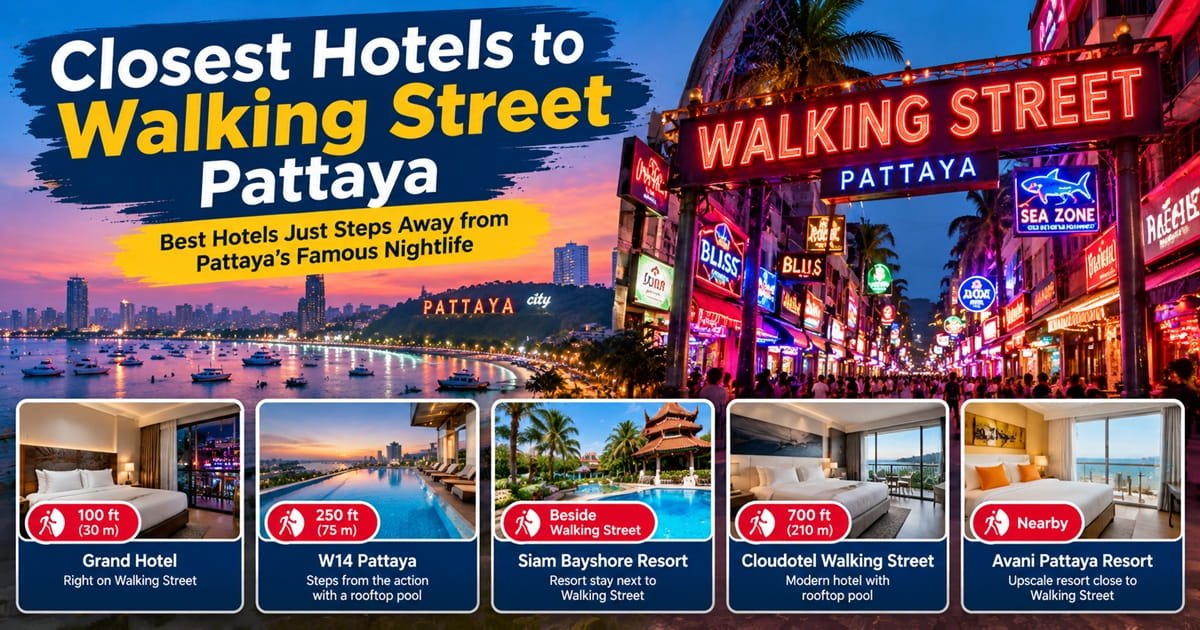
Closest Hotels to Walking Street Pattaya
Airlines

- September 29, 2026
China Southern Airlines 2026 – Flights, Deals, Baggage & India Routes
Airlines

- September 24, 2026
Air India Exclusive Deals 2026 – Promo Codes and Flight Deals
Airlines

- September 18, 2026
Saudia Holidays Exclusive Offers 2026 – Flight + Hotel Deals
Airlines

- September 16, 2026
Riyadh Air Saudi National Day Sale 2026 – Up to 50% OFF Flights
Hotels

- September 08, 2026
Etihad Holidays 2026: Deals, Packages & Booking
Airlines

- September 02, 2026